
Best Educational Toys for 1-3 Year Olds Safe choices

Best educational toys for 1-3 year olds. Safe, Screen-Free Picks That Build Motor, Language & Thinking Skills. Looking for the best educational toys for 1–3 year olds? Our parent-tested, expert-informed guide covers top picks (Magna-Tiles, Toniebox, Lovevery, Melissa & Doug), safety rules, how we evaluate toys, real forum feedback (Reddit, Quora, Twitter, Facebook), and FAQs to help you choose the right toy for your toddler.
The early years of toddlerhood, from ages 1 to 3, are a whirlwind of growth and exploration. During this time, little ones learn to stack, sort, name things, listen, and experiment—all while having a blast! When I choose toys for my kids, I focus on lasting value and versatility. Honestly, I didn’t always think this way, and we ended up with a pile of toys that served just one purpose, which lost their appeal way too quickly.

Not every single toy in our collection has to be “educational,” and that’s perfectly okay! The toys my daughters, now 2 and 4, have loved and played with over and over again have been a delightful mix. Some have been outgrown, but most are still favorites today, keeping them busy and engaged. So, here’s a roundup of the best educational toys for 1-3 year olds that have truly stood the test of time!
This post pulls together advice from child-development resources, government safety guidance, editorial testing, and real parents on Reddit, Quora, Twitter/X, and Facebook so you can choose toys that are engaging and safe. Key search terms used in this post: best educational toys for 1-3 year olds, educational toddler toys, Montessori toys for toddlers, screen-free toddler toys.
Why the right educational toys matter (and what they teach)
Educational toys for toddlers focus on foundational skills:
- Fine motor & hand-eye coordination — stackers, shape sorters, and pegboards.
- Language & listening — story players and audio toys.
- Early problem solving & logical thinking — simple puzzles, cause-and-effect toys.
- Social/emotional play — dolls, pretend-play kitchen,s and role play.
- Sensory development — textured toys, water play, and tactile books.
Expert play guidance emphasizes matching toys to the developmental stage and offering open-ended play options, not just flashy features. For a quick reference on age-appropriate play, see NAEYC’s guidance on toys by age and stage.


Best Educational Toys for 1-3 Year Olds
1. LeapFrog Learning Friends 100 Words Book

Introduce your little one to a world of learning with the LeapFrog Learning Friends 100 Words Book! Featuring adorable characters—Turtle, Tiger, and Monkey—this interactive book helps children 18 months and up expand their vocabulary with over 100 carefully selected words. Engaging word categories like pets, food, and colors make learning fun and relatable.
Touching the words triggers audio of the vocabulary, sound effects, and fun facts, keeping your child entertained while they learn. Plus, with bilingual options in English and Spanish, it fosters early language skills.
While the book does require 2 AA batteries (included for demo), new batteries are recommended for optimal use. Encourage curiosity—get your Learning Friends Book today and watch your child thrive in their learning journey!
2. Learning Toys for 1,2,3 Year Old Toddlers, 20Pcs Farm Animals Toys Montessori Counting

If you’re looking for a toy that’s both fun and truly educational, this 20-piece Farm Animals Montessori Set is a winner for toddlers ages 1–3. It includes 10 adorable farm animals and 10 matching barns, perfectly sized for little hands. Each animal doubles as a finger puppet, helping toddlers build fine motor skills, hand-eye coordination, and imaginative play. The numbered barns (1–10) and matching dot patterns make counting, sorting, and color recognition feel like a game instead of a lesson.
Parents love that the vinyl animals are soft, odorless, and lightweight, while the sturdy plastic barns have smooth, safe edges. The only downside? Smaller pieces require supervision for younger toddlers.
It’s a thoughtful birthday, Christmas, or Easter gift that grows with your child. Add it to your cart today and turn playtime into learning time!
3. Aigybobo Farm Animals Big Barn Toys for 1 2 3 Year Old
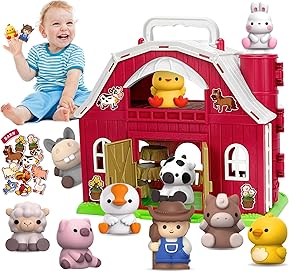
The Aigybobo Farm Animals Big Barn Toy is one of those playsets that toddlers instantly fall in love with. This bright red barn comes with a friendly farmer, nine adorable animal figures, and fun DIY stickers so little ones can decorate their very own farm. The animals double as soft finger puppets, making storytelling and role play even more exciting while boosting imagination and fine motor skills.
Made from BPA-free ABS plastic with smooth edges, the barn is sturdy and safe, while the lightweight vinyl animals are easy for tiny hands to hold. The foldable design and built-in handle make it perfect for travel.
- Safe materials, educational value, portable, and encourages creativity.
- Smaller than some parents expect.
If you’re looking for a fun, educational gift for ages 1–3, this farm set is a charming choice—grab yours today and make learning playful!
4. Learning Bugs Interactive Letter Song Book for 1 Year olds – 26 Alphabet Songs

The Learning Bugs Interactive Letter Song Book is a fun, hands-on way to introduce toddlers to the alphabet. Designed for ages 1–3, this sturdy musical book features 26 catchy songs—one for each letter—set to familiar nursery rhyme tunes that make learning feel like playtime. With 28 easy-to-press buttons, little ones can explore letters at their own pace, building early literacy skills, memory, and confidence.
Parents love the durable pages, simple on/off switch, and included AAA batteries, making it ready to use right out of the box. It’s lightweight and travel-friendly, perfect for car rides or quiet time.
- Engaging songs, independent play, sturdy design, and educational value.
- Sound volume may be limited for noisy spaces.
If you want to make ABC learning joyful and interactive, this musical book is a smart pick—add it to your cart today and start the sing-along fun!
5. LeapFrog LeapLand Adventures
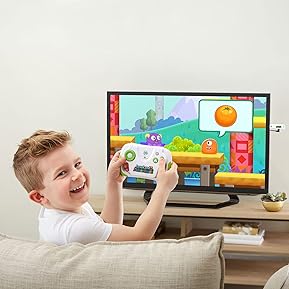
LeapFrog LeapLand Adventures turns screen time into learning time with a plug-and-play adventure kids can jump into right away. Just insert the HDMI game stick into your TV, connect the USB power cable, and start playing—no downloads or accounts needed. Using the wireless controller, children explore Clever Castle while learning letters, numbers, shapes, and colors through fun, story-based challenges.
With two playable characters and space to save progress for up to five players, it’s perfect for families. The built-in Learning Center features 150+ educational items kids can practice at their own pace.
- Easy setup, educational gameplay, replayable levels, and multiplayer profiles.
- Requires 2 AA batteries (not included).
If you want a game that entertains and teaches, this is a smart choice—bring home LeapLand Adventures and let the learning begin!
6. Think Academy Interactive Electronic Learning Pad

The Think Academy Interactive Electronic Learning Pad is a smart, screen-free way to help preschoolers build early reading and math skills. Instead of staring at a tablet, kids insert themed cards and tap the sound pages to hear letters, words, numbers, and music come to life. With both Exploration Mode for free discovery and Game Mode for structured challenges, it keeps learning fresh and engaging.
Designed for ages 3–5, it supports creativity, logical thinking, concentration, and hand-eye coordination through hands-on play. The variety of flash cards adds depth, and future expansion packs promise even more content.
- Screen-free design, interactive audio feedback, multiple learning modes, skill-building activities.
- Requires card storage to avoid misplacing pieces.
If you want meaningful play that truly teaches, this learning pad is a thoughtful gift—order now and inspire a love of learning!
7. LEGO DUPLO Peppa Pig Funfair Toddler Toy - Sensory Toy Featuring Peppa Pig
The LEGO DUPLO Peppa Pig Funfair (10453) brings carnival excitement right into your toddler’s playroom. Designed for ages 2+, this colorful 53-piece set includes Peppa Pig, Danny Dog, and Candy Cat, along with a rotating Ferris wheel, slide, and juice bar for endless pretend-play adventures. Little hands can send the characters down the slide, spin the Ferris wheel, and practice color sorting while building fine motor skills.

The large DUPLO bricks are easy to grip and safe for small builders, making them perfect for early learners. It also helps kids explore emotions through imaginative storytelling.
- Beloved characters, interactive features, skill-building play, sturdy pieces.
- Smaller set compared to larger DUPLO collections.
If your child loves Peppa Pig and creative play, this funfair set is a joyful gift—add it to your cart and let the
8. iPlay, iLearn Press to Go Car Toys for Toddlers 1-3, Baby Animal Racing Cars
The iPlay, iLearn Press to Go Car Toys are simple, exciting, and perfectly designed for little hands. Just press the animal car’s head down and watch it zoom forward—no batteries, no complicated buttons, just pure toddler fun. The bright colors and adorable animal designs instantly grab attention while encouraging sensory exploration and early motor skills.

Made from high-quality ABS with smooth, rounded edges, these cars are safe and durable for everyday play. They work best on wooden floors, tile, or pavement, making them great for both indoor and outdoor adventures.
Key Features:
- Press-and-go friction power (no batteries needed)
- Rounded, baby-safe design
- Bright colors and cute animal themes
- Durable ABS construction
- Perfect for ages 6–18 months and 1–3 years
- Easy to use, safe, portable, and encourages movement
- Not ideal for carpet or grass
Looking for a fun first birthday gift? Add this adorable set to your cart and watch your little one race into hours of joyful play!
Safety first: rules every buyer must know
When choosing toys for 1–3 year olds, safety is non-negotiable.
-
Small parts ban: Toys meant for children under 3 must not have small parts that pose choking hazards — check CPSC guidance.
-
Hazardous points and accessible parts: Toys for under-8s must avoid hazardous points and sharp edges. Look for age labeling and “choking hazard” warnings.
-
Magnets & batteries warning: High-powered magnets and button batteries are especially dangerous—keep them away from toddlers. (Parent communities and health advisories highlight this repeatedly.) x.com
-
Travel safety note: If you plan to use a toy during flights, follow FAA travel guidance about securing children and suitable child devices; FAA materials also discuss classroom-tested activities that use toys safely. (Useful when packing for trips.)
How we evaluate and select products (our process)
We use a hybrid evaluation method combining:
-
Expert guidance — developmental recommendations from childcare organizations (NAEYC) and authoritative safety rules (CPSC).
-
Editorial testing — hands-on playtests for durability, engagement, and ease of use (when possible). We note how long kids stay engaged, how intuitive the toy is, and whether adults are needed to set up play.
-
User reviews & forum signals — aggregated feedback from Reddit, Quora, Twitter/X and Facebook groups to capture real-world durability and enjoyment patterns. Many parents mention the same top performers (Magna-Tiles, Lovevery kits, Melissa & Doug, Toniebox).
-
Safety & recalls check — cross-check with CPSC recall lists and safety guidance (small parts, magnets, button batteries).
-
Value & longevity — does the toy grow with the child or get abandoned after a week? Parent commentary heavily factors into this.
We give extra weight to products that consistently receive long-term positive feedback from parent communities and pass safety checks.
Frequently Asked Questions
Q: Are expensive toys always better?
A: Not necessarily. Open-ended, well-made toys (blocks, tiles, wooden sets) often outperform flashy electronic toys because they spark imagination and longer playtime. Look for durability, safety, and developmental fit.
Q: When can my 1-year-old use magnetic tiles?
A: Many parents introduce large magnetic tiles after 18 months, but supervise closely. Avoid small magnetic toys for children who mouth objects. Check manufacturer's age recommendations and warnings.
Q: Are audio story players worth it?
A: Yes — devices like Toniebox and Yoto offer screen-free storytelling that helps vocabulary and listening skills. Parents praise them for long, calm engagement.
Q: How do I check if a toy has been recalled?
A: Search the CPSC recall database and the product’s manufacturer page. Also read recent parent reviews for breakage reports.
Q: Can I pack these toys on a plane?
A: Yes, but follow FAA travel tips for flying with children (approved child restraint systems for safety) and pick compact, non-noisy travel toys. FAA resources also have classroom activity ideas using toys.
Final thoughts
When shopping for the best educational toys for 1–3 year olds, prioritize developmental fit, safety, durability, and open-ended play value. Check CPSC safety guidance and community feedback on Reddit/Quora/Facebook/Twitter for real-world reports. If you want one recommendation that covers many bases: a combination of magnetic tiles (for STEM & spatial play) + a screen-free audio player (for language & listening) + a few Montessori-style wooden manipulatives (for fine motor) will give your toddler a powerful mix of play-based learning.
Looking for more? Check out our homepage at babybassinetworld.com: survival manuals, a plethora of one-of-a-kind goods, and valuable data

